When the perfect woman is genetically male
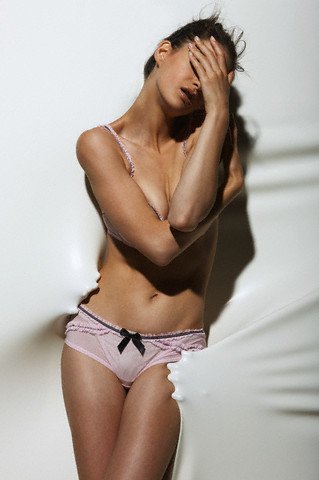 Years ago, in college, I met the perfect woman. Or perhaps a man’s idea of the perfect woman. She had flawless and dewy skin, angular cheekbones, a cinched waist, milkmaid breasts, long legs, dove-like hands, lush long hair. Wherever she went, people swiveled their necks and stared. She was a fantasy, a vision. A goddess.
And she was miserable.
It emerged that the source of her pain was a secret that she kept until she enrolled in a radical gender studies class. Inspired, she came to terms with her identity, and in the telling she liberated herself. Her secret was that she wasn’t technically female. She had a condition known as androgen insensitivity syndrome (AIS). She was the perfect woman on the outside, and inside she felt perfectly female. But she was genetically male (XY).
Her story was typical for women with complete AIS. At birth her doctors didn’t notice any difference in her genitalia. In high school she went from being a normal girl to an Amazonian queen. She was not only taller than her peers but curvier, too (some androgens are converted to estrogen which act on breast tissue). Unlike other girls, she never got acne or grew pubic or armpit hair (androgens regulate hair growth). She had no body odor. She got recruited as a runway model, was attracted to men and had many boyfriends (including a celebrity), and had sex, albeit painfully. But by age sixteen she didn’t get her period, so her mother brought her to the doctor and an astonishing discovery was made. She had undescended testes. Inside, she appeared male: no fallopian tubes, no uterus, no ovaries.
This gorgeous college student had complete androgen insensitivity syndrome. Women with this condition — approximately 1 in 20,000 — tend to be exceptionally tall and striking in appearance. AIS is caused by a recessive variant of the gene that codes for Androgen Receptor. Because the body is insensitive to the androgen testosterone, the usual male features — penis, testes, scrotum, etc. — are unable to develop. The default phenotype is female, so people with AIS have a vagina or “vaginal pouch” (although most AIS women require surgical expansion). If a woman with AIS were to get a blood test, her testosterone levels would be as high as any man’s, but her body can’t process the hormone. That’s why women with complete AIS are so feminine — arguably more so than other women. (Some people with AIS have only partial androgen insensitivity. Considered intersex, or hermaphrodites, they fall all along the spectrum between typically male and female and have a micropenis. Naturally, there’s much controversy about gender assignment at birth and estrogen or testosterone injections at puberty.)
Several women have revealed they have complete or partial AIS, including singer Eden Atwood and tennis player Sarah Gronert. Although impossible to confirm, several famous celebrities of the past are purported to have had AIS: Wallis Simpson (Edward may have given up the crown for her, but it is said they could never have sexual relations), Queen Elizabeth I, and Joan of Arc. Rumors of AIS abound, perhaps out of jealousy, whenever a celebrity is statuesque, beautiful, and lacking a biological child — Jamie Lee Curtis, Ann Coulter,and even Gisele Bunchen,among many other model types.
In a sense, complete AIS flies in the face of the evolutionary theory I write about in BLONDES. If straight men are drawn to slim waists, shapely breasts, lush scalp hair, sparse body hair, long legs, and flawless skin because those qualities represent high fertility, then AIS is the ultimate deception. As gorgeous as an AIS woman is, there’s no chance of conception. But this ultimately doesn’t matter. It’s the 21st century, and an important lesson must be learned: Femininity is about more than reproduction.




 Science of Love, Sex, and Babies
Very interesting read, thanks for posting.
Great read. I am a 32 year old woman with complete AIS, and what you have written is absolutely true.
I’m wondering what it is like to have AIS, as I never have known anyone with it 😛
Такой пост и распечатать не жалко, редко такое найдешь в инете, спасибо!
[…] 10:17 pm Filed under: Uncategorized | Tags: gender, interesting I just read a blog post called When the perfect woman is genetically male. The article talks about androgen insensitivity syndrome (AIS). The article describes a beautiful, […]
wow! i love your posts!! this one is yet another interesting read! thanks 🙂
Wow. Learn something new every day!
I remeber one episode of ‘House MD’ that the patients have this condition.
Hopefully in the future, this won’t be a condition that someone will feel they must hide in order to be accepted by their fellow human beings.
And, I’ll pass this on also:
This person is NOT a CAIS. At the most, a transexual M to F, and at the least a transvestite.
Transgender for sure.
Though it is possible to be intersex and transgender. Not the same thing, I know.
wow…..that was an interesting read…..but scary too……
While AIS is definitely interesting (and, as a trans woman, I can’t help but read about women who have AIS with a tinge of jealousy) I don’t know that AIS discounts the theory you put forward in Blondes. That is, if only 1 in 20,000 women have AIS, the overwhelming majority of tall, striking blonds do not. So an evolutionary tendency toward said blondes would still be a net win for the species (assuming the traits do indicate increased fertility and suitability as a mate). Unfortunately, I haven’t had a chance to read your book but, from what you’ve said here and the Amazon description of Blondes, I don’t think AIS would invalidate it at all.
That said, I do want to draw attention to something you said in the post:
I obviously don’t know the woman you’re referencing, but I don’t agree that she wasn’t “technically” female. Defining male and female is a lot more complicated than it seems (as this post acknowledges) and I would argue that there is no such thing as being technically female, because any two people (let alone any two scientists) may have different definitions. Rather, she identified as female and the world accepted her as female – I’d say she was female.
That isn’t to say I want to discount her struggle to reconcile her genetics with her identity and appearance. Every woman (and every man) has moments of worrying they don’t live up to whatever ideal societal standard of gender exists. And we live in a society that is unkind to those who stray to far from societal norms, and particularly unkind to those perceived to be men “pretending” to be women. It makes perfect sense that someone with AIS would strongly internalize those messages and develop a sense of self-shame.
But (as you note) gender, femininity, and masculinity, are about much more than what’s between one’s legs.
(PS – I’m not trying to imply that you don’t or didn’t accept this woman’s identity as female. Rather, I want to note how insidious language can be when speaking about the authenticity of one’s identity, and that words like “technically” can be viewed as qualifiers used with the intent of dismissing another, even if unintentionally.)
Rebecca, thanks for your post!
To respond in brief:
1. When I write “technically female,” a better word choice would have been “genetically female.” I like how Eden Atwood, who has AIS, says that when forced to check the box to identify her gender she checks “female.” Female is how she feels, so female she is. But she checks it “only because the box is there.”
Here’s an interview with Eden Atwood:
http://abcnews.go.com/Health/MedicalMysteries/Story?id=5465752&page=1
2. I’m not saying AIS invalidates evolutionary theory. I just enjoy the irony that women with AIS have features (curves, good skin, etc.) that men find attractive because those features suggest high fertility. The same applies to beautiful trans women!
Jenna,
Being of mother of 4 beautiful, highly diverse girls, i am delighted to hit upon your blog and will read your books. I am constantly looking to at least glean from the groves of “science geeks.” Having one amazon willowy girl with problem ovaries and other signs of hormone aberrancy, i am constantly seeking to understand and be of assistance to her in her life. Human sexuality is an enigma so much more so when not viewed thru the lense of modern science/bio-facts.
Thanks for sharing your remarkable acumen, inspired wit and style and not keeping a wonderful talent for transposing technical knowledge into public information to your self!! You are an asset to this we call life and you must have a very proud mama I have a very bright writer for a daughter. I hope she will be as great a contributer to her generation and hungry minds/souls as you are. (not intended as fluff just thought i should share that you are blessing beyond the monetary) I look forward to reading more of your blog as i follow it, as well as your books. Hopefully you will post when you are going to be a guest speaker on some media fronts. i can set the DVR : )
Blessings,
Sherrie
Sherrie,
Thank you so much for your kind words. They made my day!
Jena
To me, saying that an AIS woman “isn’t technically a woman” makes as much sense as saying that a child born without legs due to some accident of fetal development “technically has legs”.
Yes, standard human natal development of an XY chromosome results in a male, but AIS has caused the XY chromosomes of these women to result in what is unmistakeably a woman. At this point, it doesn’t matter what her genetic code says – her body has already been formed, and it is what it is. To look at her and insist that she is somehow really a man is as logical as insisting to that child that her legs exist.
The only pertinent difference is that, unlike the hypothetical child, who would face a lifetime of struggle, an AIS woman can quite easily do anything any other woman can do, with the exception of bearing children and a few other reproductive issues…a condition faced by plenty of women who are not AIS in the slightest.
I like you blog very much! Always good and interesting reading. I have started a blog about Italy since I live there and it would be a pleasure to have a visit from you guys. I am sure there is something for everybody on the blog.
Thanks for sharing… It was really interesting and somehow I feel sorry for those with AIS.
Very very interesting post! Good read, thanks 🙂
Is the above image of the actual AIS woman referenced in the post? Or is it included as an example of what “she” might look like? Just curious.
Thanks for sharing this interesting read.
Nice post, excellent reading!
After all this reading, why exactly is femininity more than breeding? Because this ‘male’ looks like a woman? So what looks is what is? Seems to me the DNA tells it all. Then, she feels she is a woman, so who am I argue?
I want to make clear that I have no prejudice of any kind in this matter but feel a lot of these issues are gender bent the other way to make those who have this feel more human/male/female. You are human, the first of all awareness and there’s more between heaven and earth than we know, there’s probably a lot more between males and females. Stop worrying about genders, only in the breeding department does that matter. We all have our cross to bear.
Xia, I agree that we should all transcend gender. As for discussion about femininity, see response to Rebecca’s post above.
wow…this made me see hermaphrodites in a whole new light.
Thanks for the response, Jena! I completely agree with your thoughts on femininity. (Interesting link, too!)
Ann Coulter! Let’s leave non-humans out of the equation, shall we?
😉
Yeah let’s dehumanize people we disagree with. Important first step before we can slaughter them.
Moron.
If anyone wonders why someone with AIS would feel shame and fear rejection you need only to see the comments posted here. While most are honestly respectful and recognize this is a subject and experience most know nothing about, there are always those who are insensitive and judgmental about anyone that is different. Referring to someone as “hermaphrodite” is insulting, insensitive and factually incorrect. Referring to someone with AIS as “male” in any way other than discussing their XY chromosomes is insulting and insensitive. It’s just as insulting to refer to an AIS woman as “she” in quotes. And how, exactly, is this “scary”? And what was the point of that video posting?
The media is often wrong when dealing with conditions like AIS (and Swyer’s Syndrome, a similar condition where a phenotypical female is later found to be genetically male and has a female reproductive system with undeveloped gonads). In that episode of House, they refer to the AIS patient as “he” after diagnosis is made. Also insulting and insensitive. (see the Intersex Society of North America’s response here: http://www.isna.org/node/1008). ER also had an AIS patient storyline that was sensationalistic, insensitive and insulting.
Let’s face it, gender and sexuality discussions make us uncomfortable. For some people the easiest thing to do is shut down, build walls of difference or retreat to a place of immaturity and perceived superiority.
I am a woman with Swyer’s Syndrome, a diagnosis that took me years to uncover due to it’s rare nature and the lack of both knowledge and comfort about intersex conditions. I have never felt anything but female, and my XY chromosomes don’t change that at all. I respect people who want to better understand the world’s diversity, but it must be done with sensitivity and respect. Don’t talk to me about God and his plan. Don’t tell me I am lucky to never have had a period or breakouts. Don’t refer to me as “she” or “male”. Don’t keep spreading rumors about famous women who may have AIS or a related condition. Don’t compare me to transsexuals or other gender dysmorphic disorders or cross-dressers or homosexuals.
The gender diaspora is far more diverse and shaded than you can imagine, but the shades of gray are not interchangeable. To understand is to leave judgement out of it and keep an open mind about the many shades of gray that are presented in nature. It is what it is and it’s always been that way. We are just now starting to understand the diversity and develop language to explain it.
I agree. I also have AIS. I have always felt female. I never felt there was a problem with my sexuality, until other females in my life, told me I should be ashamed of my genitic defect. I am glad to say now that I am no longer ashamed. I feel comfortable talking to others about AIS. I tell my student nurses we should strengthen body image, instead of focusing on our differences. My honesty has allowed many of my friends and students talk to me about their body dysmorphic disorder and intersex disorders.
I love going to the yearly support group meeting for USA branch of the AIS. All the women were fun, loving, supportive, and beautiful. The yearly meeting for 2011 is in Washington. Check out the web site. http://www.indiana.edu/~ais/html/home.html
Hi !
Read your blog. My teenager daughter has CAIS. As you also face the same condition, can u clarify about few things I am extremely worried about?
After gonadectomy will her sexuality and libido be lost for ever?
Is vaginoplasty a very painful process which takes long time to recover?
Will my daughter develop masculinity later in her life?Her skin is too dry and glowless.
Manu Jha
I am a woman with AIS and I completely agree with Cat .. I have a great life, but I feel I am emprisoned by my condition, allways fearing people finding out specifically because of some of the negative comments left on this site..
It is so very difficult to find a long tern relationship and know who to trust with this information.
I would very much like to re-enforce that we should not be compared to transexuals, cross dressers or transvestites, which is so enfuriating.. as much as I respect other gender/sexual variations, we are not that.
Peace to all
Miss G
Hello, I would like to start email and/or chat with any ais females looking for a relationship. I am a man for who having children has never been very important. If you go to my blog, then my profile, you can get my email address. I have been educating myself about intersex issues because of concerns in my own life. From what I understand, ais women are just like other women that have been stigmatized.
I want one!
It is ironic that a diagnosis of AIS causes these women to question their identity. If you think about it their prescence throughout history has created the archetype of femininity that women aspire towards. Clothing that accentuates or creates the curves, high heels to shape the leg and aproximate the statuesque look, makeup to create the illusion of perfect glowing skin and color and depilatory techniques to create smooth, silky hairless skin. The other element is held in the age old phrase, “ladies don’t sweat, they glow”. There are also numerous stories and myths about the beautiful woman who men fight over or who is chosen by the king or greatest warrior, but often she is troubled because she can’t have children. Think Gueneverre (King Arthur). Makes you wonder. Far from being stigmatized these women have a big advantage to move through life, the only thing they need to reconcile themselves to is the not being able to have children of their own.
You’ve done it again! Amazing post.
I have swyer’s syndrome. I am xy but have uterus and all that. I am now pregnant via invitro fertilization. It is a miracle for me. I am totally lesbian and my partner and I are so excited about the baby. shalom. candy
!!!!! Please let this be me. I’m attracted to women and sexually dominant. I’m not interested in giving birth anyway, though I’m glad you are and are happy obviously
hi iv just read this post and its very true every thing u put was just me iam 23 and found out i had cais about 3 years ago its been realy hard for me to deal with, i havent spoke or met any one else with ais x
[…] Pincott wrote an article on her blog entitled When the Perfect Woman is Genetically Male. She sums up the cause of the syndrome very well: This gorgeous college student had complete […]
Great Article
really great read, very informative!
I never get bored of reading this, such a lovely read!
I’m also a C.A.I.S sufferer and I’ve started a blog discussing my experiences as well as other goings on in my life such as my inappropriate thinking!
Please feel free to subscribe to my blog, I’m hoping to connect with others who have intersex conditions to show them they’re not alone… And it’s also worth a cheap laugh!
x
inappropriatesam.blogspot.com
Hi, I’d love to sign up to your blog but it appears to be by invitation only.
It is well documented that globally 1.7 percent of children are born hermaphrodites – individual who have both male and female reproductive sex organs. Here’s some food for thought. When you take any 2 individuals, the odds are now twice this (3.4%) that one of them is a hermaphrodite, which means that 34 in 1,000 couples are participating in a gay marriage, most likely without their knowledge.
In the past, when a woman in a marriage couldn’t conceive and the doctors found the reason to be that she or he was a hermaphrodite, they used to tell the couple, which typically destroyed the marriage. Now, doctors have an unwritten policy to not reveal this reason in order to save marriages.
I wonder how many people against gay marriage have had gay sex or are in gay marriages and don’t know it? 😉
That’s absurd. That a woman has a genetic anomaly doesn’t make her a man in a “gay” marriage. And doctors in the past wouldn’t have had a way to explain her infertility. The tools to identify such problems are relatively recent accomplishments. A doctor today would most certainly tell the patient of their genetic anomaly so that they know what is going on and because they have a duty to do so. I sure wouldn’t mind having the skin, but I wouldn’t give up my kids for it.
My daughter is missing a portion of her brain, by your leaps and definitions that would make her brain dead, when in fact she is a very normal 3 year old who needs therapy to teach her to use one half of her body. You would have a tough time telling something was different about her, the young brain is amazing.
Anomalies in pregnancy are common, some genetic some not. Except for someone doing hard core drugs they are not preventable. The really bad anomalies usually result in miscarriage in the first trimester and the rest are either not a problem or have to be lived with. I have to say I don’t see the hermaphrodite or AIS anomaly to be that bad, difficult or big a deal. If you disagree try visiting a children’s hospital or therapy program and I bet you’ll change your mind.
you say you don’t see it is a big deal? maybe if you had it yourself or your daughter had it, you would understand. it may not seem a big deal to you, but to me it is everything.
i understand what you’re saying and i agree with you when it comes to the whole “gay marriage” thing because that’s so wrong. gender identity is about more than genetics. it’s about how you feel physically and mentally.
but saying AIS is not a big deal really is ridiculous. it’s something i have to live with and something i think about every single day.
Why are you even on this site? I’m sorry your child has problems. This site is for WOMEN who need to share their AIS stories and feelings. According to you, having AIS is not “that bad”. Go complain about your problems elsewhere.
I am so happy I found this article. I was diagnosed with CAIS just after my 14th birthday. I am now 22. I still struggle with this, and the most I tell people is that I can’t have children, and I was born without a working reproductive system (since it is half of the truth). I’m still trying to find the courage to tell people the whole truth. I am pretty sure only 3 people besides my doctors know everything. I am hoping to change that this weekend. I’m trying to find the courage to tell my boyfriend, the love of my life. I think I may show him this article first. See what his opinion is on it. And hopefully tell him that this article describes exactly who I am. And I hope he is accepting.
And for a side note. I think that issues like these need to be brought to public attention. Create a national understanding of these conditions. Because I know that I am not the only one who is petrified to tell people outside of the family. I feel female. I am attracted to men. But its hard to comprehend the reality of this condition (even after 8 years of being diagnosed). I am female, and I am attracted to men; therefore I am straight. I am genetically male, so if I am attracted to men, would that make my attraction gay? Since i’m genetically male, does that mean I am supposed to be attracted to genetically female? [[do you see this vicious cycle of thinking?]]. But in the end, I am female. Like posted earlier, when filling out paperwork, I check female. Even if there were a spot to check other, I would still check female.
i am a sufferer of complete AIS yet i do not fit the description of being tall, slim and beautiful. i’ve always been short, always been big and have never been described by anyone other than my very understanding boyfriend as beautiful.
i’m 18 and, because of a hernia not long after i was born, i’ve known about my condition all my life. but only recently have i been looking into it myself. reading articles like this make me sad, because on more than one of these websites, i’ve found information and evidence of CAIS girls being beautiful and i am not.
it makes me wonder if the doctors made a mistake with me, but obviously that’s just me kidding myself.
however, i loved the last line of this article. femininity is not just about reproduction. and it’s not just about appearance either. it’s about how you feel. i feel female – although, because of knowing about my condition, i’ve questioned it in the past. but i do feel female, i feel like a girl. i am a girl.
Please stop perpetuating this nonsense about AIS women! They are not more physically attractive than genotypical women. This is a myth that has been perpetuated by the media. In fact several CAIS women are quite androgenous in appearance. AIS sufferers are nothing to be jealous of. No one would wish to be born intersexed. In case you’re wondering, yes I do have AIS and have contacts with the same condition so know what I am talking about.
House MD, season 2 episode 13.. same thing happens to the ultra-beautiful model.. interesting.
Very interesting reading. Found out a few years ago I have CAIS. Quite a thing to wrap your head around.. nearly did me in. It has taken much time to adjust to what it means for me and who I am but finally have achieved full circle-ness.
Ps..I’m not gonna lie.
yes I am tall and pretty hot.
Oh yes and I meant to say…in a way sort of glad to find out why I always felt so different from the other girls around me. I just never felt like I quite fit in… they naturally had something I didn’t but I found my own path..in my own way. Needless to say felt like a complete freak when I found this out about myself when my mother revealed this to me accidentally in my mid twenties. I bottled a lot of resentment to my parents for not telling me but they did not feel I could handle it as a youngster. In retrospect I can see they did what they felt was best and can respect them. I am not sure I would do the same though. Anyway.. I hope that anyone else out there does not feel too lonesome. There are reasons to be and exist with no shame..
Whyixy,
Love your enthusiasm! I’m a CAISer too and you’re right, we are a hot bunch of girls!!
Are you a member of the AIS group on Facebook? My friend Imy set it up, if you’re not a member already deffo join: https://www.facebook.com/#!/group.php?gid=135193536640
My Blog: inappropriatesam.blogspot.com
xx
I’m sorry, but being feminine is ENTIRELY about being able to conceive. If you’re not able to conceive, then you are not a woman. My dear progressive-minded friend you need to read a few books and understand the implications of your last statement. Sure, it might be the 21st century where science can do anything, but when you make such a statement as to mean that there is more to being a woman than the ability to bear children, then you, you uneducated sloth, are, as it would follow, destroying nature, and further, the family. Well done! I wish you the best in life. For your own sake (so that you are not made fun of more), you ought to take this site down and quit the day job because of your obvious lack of knowledge and utter incompetence. Leave the thinking to the smart people, thanks.
To Binford:
I can’t tell if you’re a women or a man, either way (and I don’t mean to sink to your level although that’s precisely what I am doing), you’re not a person. What if someone grew up not knowing they had CAIS (or any other syndrome that results in infertility), and even died not knowing. Would that make them “not a woman”? When would they have even questioned it? If you’re a man, what if someone kicked you so hard in your area that you became infertile, would that make you “not a man”, and if you’re a woman, say you get ovarian cancer or whatever else and you can no longer reproduce..would that make you “not a woman”? Didn’t think so. And how dare you criticize someone who is simply trying to inform people of a NATURAL occurrence. I did get a kick out of your last sentence though. I hope you don’t consider smart.
I have CAIS and from the moment I was born I was raised female, and I have always felt female. It’s hard enough trying to tell people that I love and who love me about my conditon without people like you in the world.
And fyi, I AM A WOMAN.
Um im sorry but are your mother or grandmother no longer a woman because they went through the change and no longer possess high levels of estrogen nor the ability to bare children? Will you be a man the minute you can no longer concieve? Are women who cant bare children for heaps of other reasons all men? Youre the type of disgusting person that these women fear and you make me absolutely sick. Meanwhile youre probably hideous , have a mustache and bare zero femininty…. Rest all your womanhood on the fact hat you can bare a child and have a functioning twat…..
You mean to say that all xx girls who go for surrogacy and in-vitro or suffer miscarriages and few who are childless by choice are not girls, but men.
Lol…..
You need to educate urself.Feminity is not just about bearing children. There are millions of childless women in this world. You are questioning their feminity.
Add Coco Chanel and Gala Dali to the list…
To Binford:
I can’t tell if you’re a women or a man, either way (and I don’t mean to sink to your level although that’s precisely what I am doing), you’re not a person. What if someone grew up not knowing they had CAIS (or any other syndrome that results in infertility), and even died not knowing. Would that make them “not a woman”? When would they have even questioned it? If you’re a man, what if someone kicked you so hard in your area that you became infertile, would that make you “not a man”, and if you’re a woman, say you get ovarian cancer or whatever else and you can no longer reproduce..would that make you “not a woman”? Didn’t think so. And how dare you criticize someone who is simply trying to inform people of a NATURAL occurrence. I did get a kick out of your last sentence though. I hope you don’t consider smart.
I have CAIS and from the moment I was born I was raised female, and I have always felt female. It’s hard enough trying to tell people that I love and who love me about my condition without people like you in the world.
And fyi, I AM A WOMAN.
To Sylvia.
When I read Binford’s post I was utterly disgusted, particularly as I suspect he is a guy. I feel almost as if he is taking this attitude, either because he has some personal issues, or because he is simply trying to find targets he believes he can easily ‘wound’. I deeply regret the lives that some women with AIS and CAIS have been forced to endure, and this jerk merely perpetuates the potential for pain and distress that anyone who has the condition may have to deal with. I am a guy. I don’t know if I am different than most guys but if I knew a woman who was brave enough to tell me she had AIS, I would cherish her no less because of it.
To you and to any other women with the condition I just wanted to let you know that there are guys out there who will not judge you and act differently. I know this is easy to say and in all honesty I have never knowingly met anyone with the condition, but isn’t that the point? I simply wouldn’t know one way or the other. And yes, you are a woman.
Love and understanding to you all.
C
Hey. This was very interesting!
I have a question for anybody willing to answer? I mean this with no offense intended, just pure curiosity. How come she had breasts? I mean, if she was genetically male and did not have periods or anything how come she developed breasts? Just confused!
Thanks!
Estradiol is a metabolite of testosterone. Since she’s insensitive to testosterone and other androgens the effects of estrogens are not counteracted. If the testicles if left in place in order to permit female development then they have to be monitored closely because they are prone to malignantcy. Fortunately testicular cancer is much more treatable then it used to be. Once the testicles are removed horomone, replacement therapy is necessary to prevent osteoporosis.
I’m a believer in patient’s rights. Informed consent should be given before before the testicles are removed.
I don’t find any of AIS women examples listed hot so I don’ t know why they are saying the ultimate women. Personally it would weird me out and could not be in a non-platonic relationship with one
you forgot daryl hannah lol
Interesting piece, but as someone with AIS (high level PAIS to be exact) – there are several things I take issue with. If you wish to read about them, here’s my blog:
http://queerintersects.tumblr.com/post/6839039897/when-the-perfect-woman-is-genetically-male
And to answer your question Kirsty, women with CAIS develop breasts at puberty because all of the androgens (like testosterone) that the body is producing but unable to process are naturally converted into estrogens.
I was brought here by a link from a forum where the person posting has CAIS. Though the article was nicely written, what I find most interesting are the comments. It’s sad that this day in age, so much is focused around others and society as a whole being sure of one’s gender and sexuality. It seems people like black and white, and when grey exists they either dismiss it, or try to repress it. Uncertainty makes self-proclaimed “normal” people uncomfortable.
While I don’t have AIS myself, I do have a good friend that does, and I find it infinitely sad that she feels ashamed of her condition. Quite a number of comments here illustrate why, (Binford’s in particular). Why are people so keen to stereotype others into neat little identifying boxes, and quick to exclude those that don’t fit into their preconceived ideas?
I am bisexual and I find that while most assume I am straight because I am a woman in a current relationship with man, they seem confused or threatened when I indicate attractions for other women. For me, it all comes down to accepting, loving, and being attracted to people for who they are, regardless of their genetic makeup or what’s between their legs. If someone identifies as female, male, or somewhere in between, regardless of their physical appearance, that’s a personal matter and has no bearing on who they are as a person. Let’s learn to love others for their fitness as a person, and not based on some assumed societal blueprint of how they should look and what they should prefer.
im a fifteen year old girl with complete AIS…
Hi A.T.
You may already have found this site, but in case not, this may prove useful and supportive. Go and have a look at this site and I hope things are OK for you. They can be contacted and hold regular meetings
http://www.aissg.org/
There is also a US support group also that can be found at:
http://www.aisdsd.org/
C
@ Miss G – “we should not be compared to transexuals, cross dressers or transvestites, which is so enfuriating”
I think up until this point I could totally rally behind what you were saying. In the medical community and beyond there are just so many preconceived notions of what gender is and what it isn’t. Women who were born with an XX genetic makeup have a hard enough time proving their femininity in our culture as it is. It has become a huge problem for women everywhere.
However, nothing infuriates me more than the hypocrisy that often arises as one misunderstood group often perceives another. It would be one thing to set the record straight on what exactly constitutes an intersex condition while dispelling a few myths and stereotypes. However, in the same breath you apply the same brand of ignorance you’re accusing others here of having by suggesting that transgenders, crossdressing, and transvestites can be bundled into the same basket. Gender dysmorphic disorder and cross dressing couldn’t be further apart from each other
I was diagnosed with this a few years ago. I’m thoroughly insulted at the fact that you’re insulted at the comparison. I’m the first person who would sympathize with anyone who ever had to walk into a doctor’s office and ask them what was wrong with you, only for them to tell you that you’d never be normal. However, don’t think that your condition is a half step more legitimate than mine simply because your condition is easier to diagnose.
Imagine walking into a doctor’s office to find out that you have a problem but no one can really tell what that problem is. You’re left to turn around and figure it out on your own. At the end of the day, your chromosomes say XY and you live every day of your life trying to prove you’re a woman in a world where people like Binford exist. I’d say the diagnosis is different but in the context of society the dilemma is very much the same. Before letting ignorance fly from your mouth, practice a level of understanding and mercy that you’d hope people would have for you.
Gisele Bundchen has a biological child. Don’t make things up.
Trixel, hasn’t she stated that “Rumors of AIS abound, perhaps out of jealousy, whenever a celebrity is statuesque, beautiful, and lacking a biological child”. You should highlight the words “perhaps out of JEALOUSY”. She’s not making anything up…
by the way, a really nice and informative article.
Hi,
I enjoyed this informative and well-written article. The comment by “binford” is that of a troll, a cyber-space terrorist who walks into a room with a bomb tied to his belly and destroys the spirits of those who simply are looking for community, perhaps an answer, and a measure of peace. He has accomplished his mission if you give his vitriol any credence.
I hope the following words are received as kind: For those women with CAIS, Swyer’s, and other similar conditions, recall that before karyotyping existed, the measure for determining the sex of a newborn child was the genitals. Recall, you were born baby girls, and are nothing short of being female, just with a unique medical condition. And that’s all it is. Having a new test doesn’t invalidate what your genitals, body, sensibilities, interests, and sexual orientation quietly, but assuredly says: You are women.
One reply addressed how much should be revealed to a boyfriend. It’s none of his business, nor is any other part of your medical past, unless it could directly place him in harm’s way, such as a positive HIV status or an untreatable and easily spread STD. Again, you are a woman, and no XX woman would give a detailed accounting of every menstrual period she’s had to prove her claim of being female. Neither should you.
Take care.
Angelae D. Le’Chastaignier
Sherman Oaks, CA
Hi,
I enjoyed this informative and well-written article. The comment by “binford” is that of a troll, a cyber-space terrorist who walks into a room with a bomb tied to his belly and destroys the spirits of those who simply are looking for community, perhaps an answer, and a measure of peace. He has accomplished his mission if you give his vitriol any credence.
I hope the following words are received as kind: For those women with CAIS, Swyer’s, and other similar conditions, before karyotyping existed, the measure for determining the sex of a newborn child was the genitals. Recall, you were born baby girls, and are nothing short of being female, just with a unique medical condition. And that’s all it is. Having a new test doesn’t invalidate what your genitals, body, sensibilities, interests, and sexual orientation quietly, but assuredly says: You are women.
One reply addressed how much should be revealed to a boyfriend. It’s none of his business, nor is any other part of your medical past, unless it could directly place him in harm’s way, such as a positive HIV status or an untreatable and easily spread STD. Again, you are a woman, and no XX woman would give a detailed accounting of every menstrual period she’s had to prove her claim of being female. Neither should you.
Take care.
Angelae D. Le’Chastaignier
Sherman Oaks, CA
hello, I am a teenage girl with complete AIS and i just want to say that to all the young girls out there that you’re not alone & that there’s someone here 🙂 !! Its been a little over a month since i found out abut my genetic defect and i can say that i couldn’t be any happier. Of course i was really emotional when i got the news but it was all shock. My parents don’t see me any different as well as my closest friends that i told. I’m not seen any different and i look like any other teenage girl, and seeing these comments make me really sad knowing that there is people out there bashing women with AIS. We’re not “transgenders” or “shemales” we didn’t choose this, it chose us and if you think otherwise,, then so be it. loved the article by the way !
I have AIS as well. I am 24 years old. The hardest part is really seeing my friends settling down, getting married and having kids. Knowing that I can’t have that. I turn down every guy, because I don’t want anyone close to me, so they will know my secret. I want to keep it to myself, because I am afraid of being rejected. I feel very less a woman, and wonder and think that I will probably be alone my whole life. Im happy I found this, I felt alone before, but it was nice hearing other womens stories, who has the same condition. You girls are strong and my inspiration.
Thank you for at very enlightening tale. I assume that this condition can result in all kinds of psychological torment if not recognised or dealt with in a sober scientific manner.
I have a thought, though: is it possible that some people might overthink their way into believing they’re born with the wrong sex? As I have seen during the years I’ve lived, it is possible to believe all kinds of “unbelievable” things, like believe in UFOs and Gods and magic and all kinds of things. Sometimes the “unbelievable” stuff is going on because it is impossible to refute, like the “God of the gaps”. Sometimes one can be led astray by other people.
I understand that your particular condition is scientifically sound and proven, but could it be that SOME people have thought their way into a maze of misunderstanding of their selves? If not, do you then profess that NOW should encompass (your personal) ETERNITY? What I’m trying to say is: sometimes one’s thoughts and feelings can lead one astray, and then it is nice if the people surrounding you can guide you.
I am glad I read your text and I hope you get a great life.
[…] XXs with an SRY gene plunked onto one of the X’s. Another type of female with XY chromosomes has androgen insensitivity syndrome, lacking receptors on cells that bind testosterone, cutting of the hormonal signals necessary for […]
[…] There will be a few differences, though, but because human beings are so diverse, it’s hardly likely that anyone will notice them. Remember, this individual will not react to any androgen whatsoever. That means that her development will in fact be ultra-feminine — there will be no effects from androgen. And yes, at puberty this will mean big, round breasts, wonderful skin, no facial or body hair, but just luxurious hair on the scalp, and so forth… On the other hand, even if this person has no working androgen receptors, she still has parts of the ‘blueprint’ for a male; so, when things like the ‘growth’ cycle is triggered, because she has genes for a male growth, she will be usually taller than the average female in her area, with stronger bones, nicer legs… well, some have maliciously described them as ‘superwomen‘. […]
I have PAIS, it’s a massive spectrum just on its own.
For those of us with the condition, it’s confusing, but we research a lot. Those without, that might be reading through these comments will no doubt be more confused than ever.
I had surgery to make things better for me in the future. It made no such improvement.
But I’ve still managed to get things done. Many things. Catch me on Twitter, there’s a lot of information there, too.
They are not a deception, they are quite honest through their neutral body odor: they completely lack the fine feminine scent which a female most evaporates during ovulation. I got once hooked on such a fake women with CAIS in my 20s (I do love femininity and they serve it well at first sight), but something always felt missing and after almost 2 monthes I was done with her/it. I never knew until she lately exposed this fact (to a common friend), because the condition gets more and more accepted, which I think is great for such query people. Nice looks, nice character, but not “convincing” at the end, at least not to my system (horny male)